A Minecraft journal, IV: the perimeter settles

Since the last stretch of work, the changes around my residence have not come from exploration, but from proximity. Instead of moving outward, I have spent more time adjusting the spaces immediately around me, noticing how small shifts in layout can quietly alter the rhythm of daily movement.
This article includes high-resolution images, which can significantly increase page load time and data usage.
The Turtle and Salmon pond moved once again.
Not far, but far enough to change how it feels. It now sits outside the main residence fence, separated from the inner courtyard yet still protected within a larger perimeter that encloses the entire area. The relocation was not driven by necessity so much as by clarity. Inside the fence, the water always felt like it interrupted the flow of paths. Outside, it functions more like a boundary marker than a centerpiece.
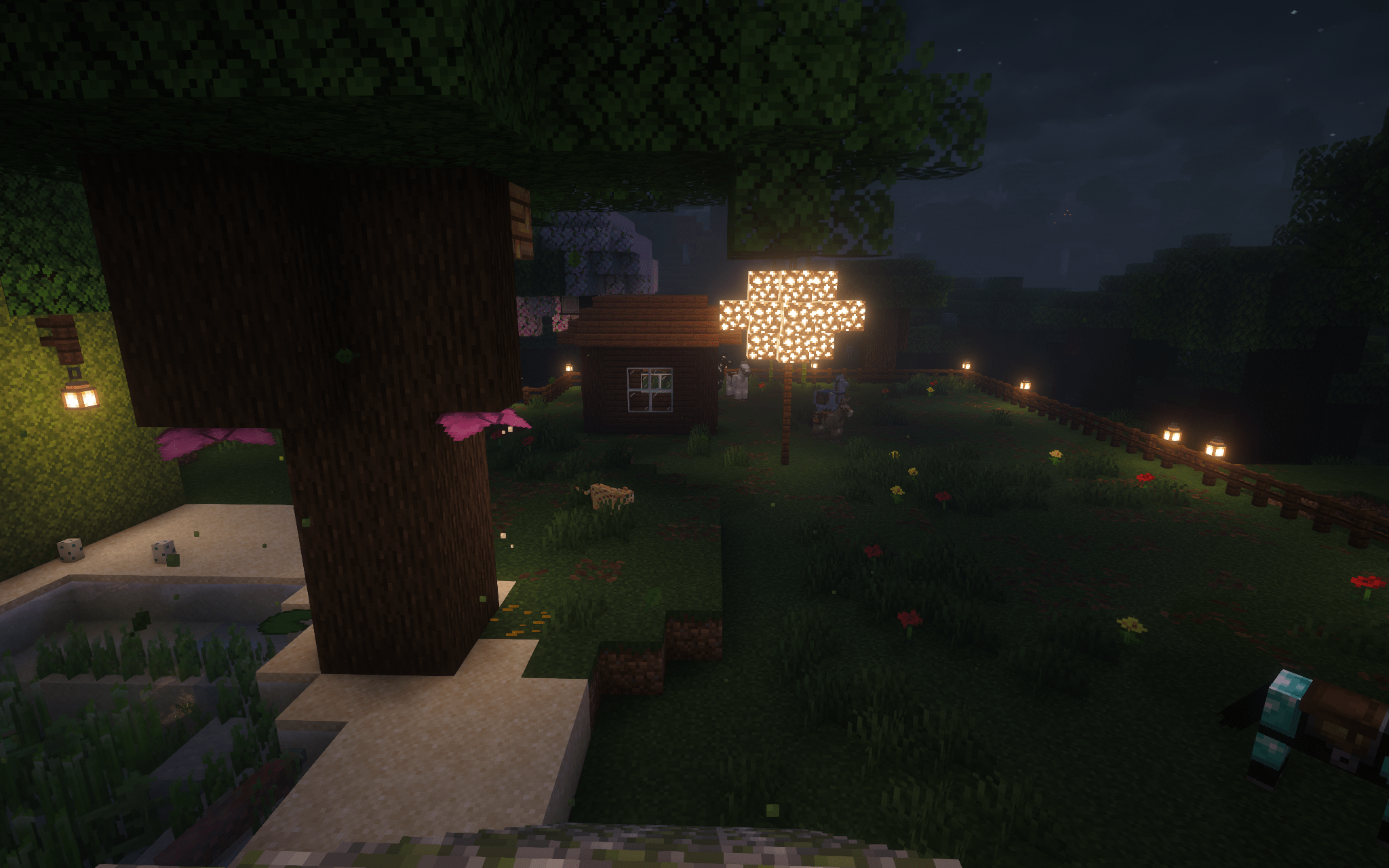
Outside village, first stage
For a long time, I had considered making the surrounding land feel less static. Not busier, exactly, but more inhabited. The terrain around my residence has always been quiet, sometimes too quiet, and the idea of adding a small settlement lingered without becoming a plan.
Eventually, it did.
The nearest village is not especially close, and transporting its inhabitants proved less straightforward than expected. Boats move easily across water, but over land they demand patience. The process took two full in-game days and nights, dragging the boat across uneven terrain, stopping frequently to clear obstacles, and accepting that progress would be measured in small increments rather than distance.
It was slow, but it worked.
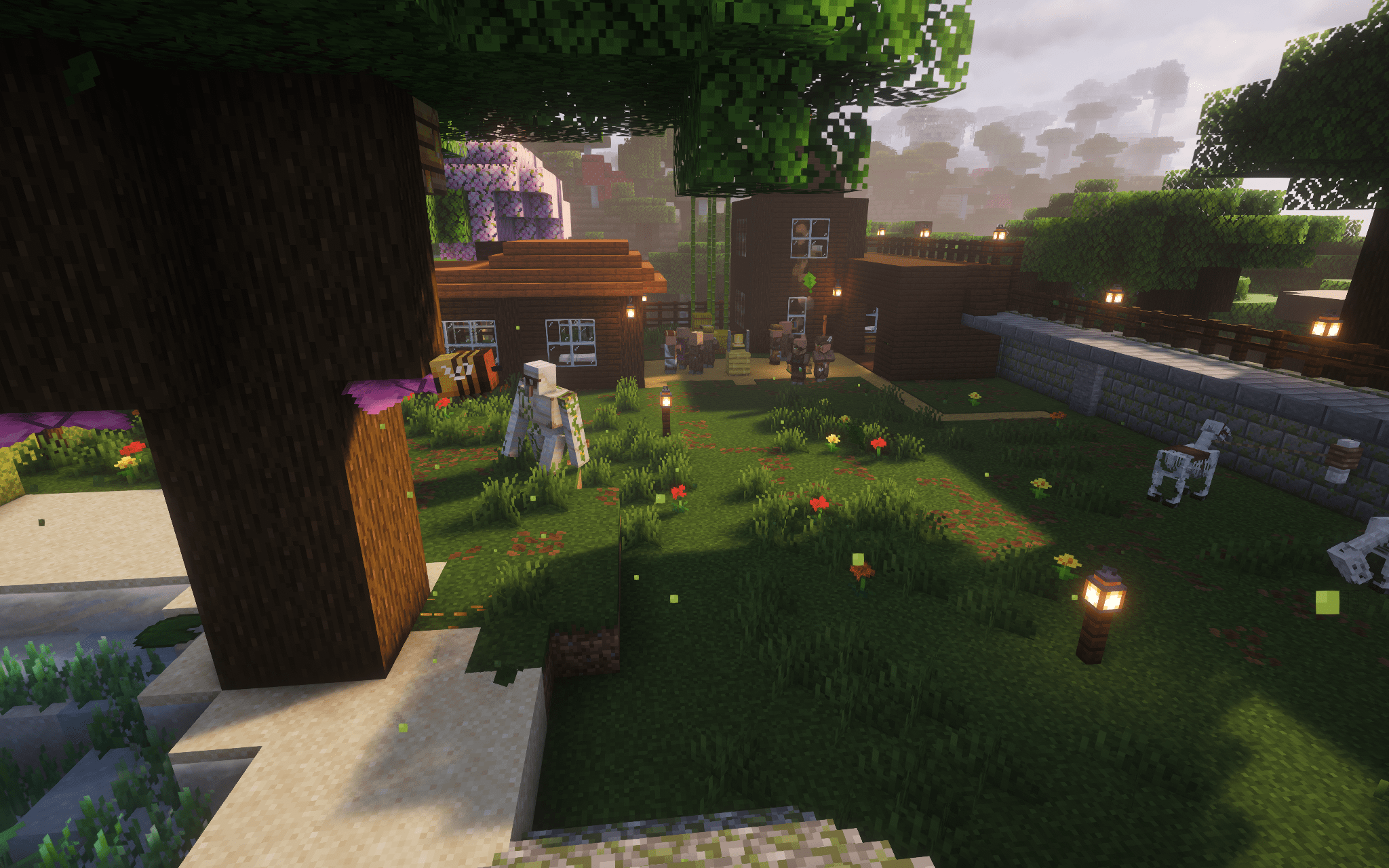
Outside village, second stage
Once they arrived, I built a small cottage near the outer fence: beds, basic workstations, and a modest grain and carrot field. Nearby, I added a second structure, part shed, part dormitory, with additional work areas and a narrow balcony overlooking the surrounding terrain.
A walkway now runs along the inside of the stone village fence, elevated just enough to provide a clear line of sight outward. From there, I can deal with wandering zombies before they reach the gates. It is not a defensive system in the formal sense, but it reduces interruptions.
What began as a small settlement did not remain small for long.
Villagers have a way of multiplying once the conditions are stable. Beds filled, workstations activated, and over time the population grew without any deliberate effort on my part. There are now twelve of them moving through the space, following predictable routines that slowly made the area feel less temporary.
The village does not feel lively in the dramatic sense. It feels steady. The sounds of doors opening, footsteps on paths, and the periodic restocking of trades create a background rhythm that was absent before.
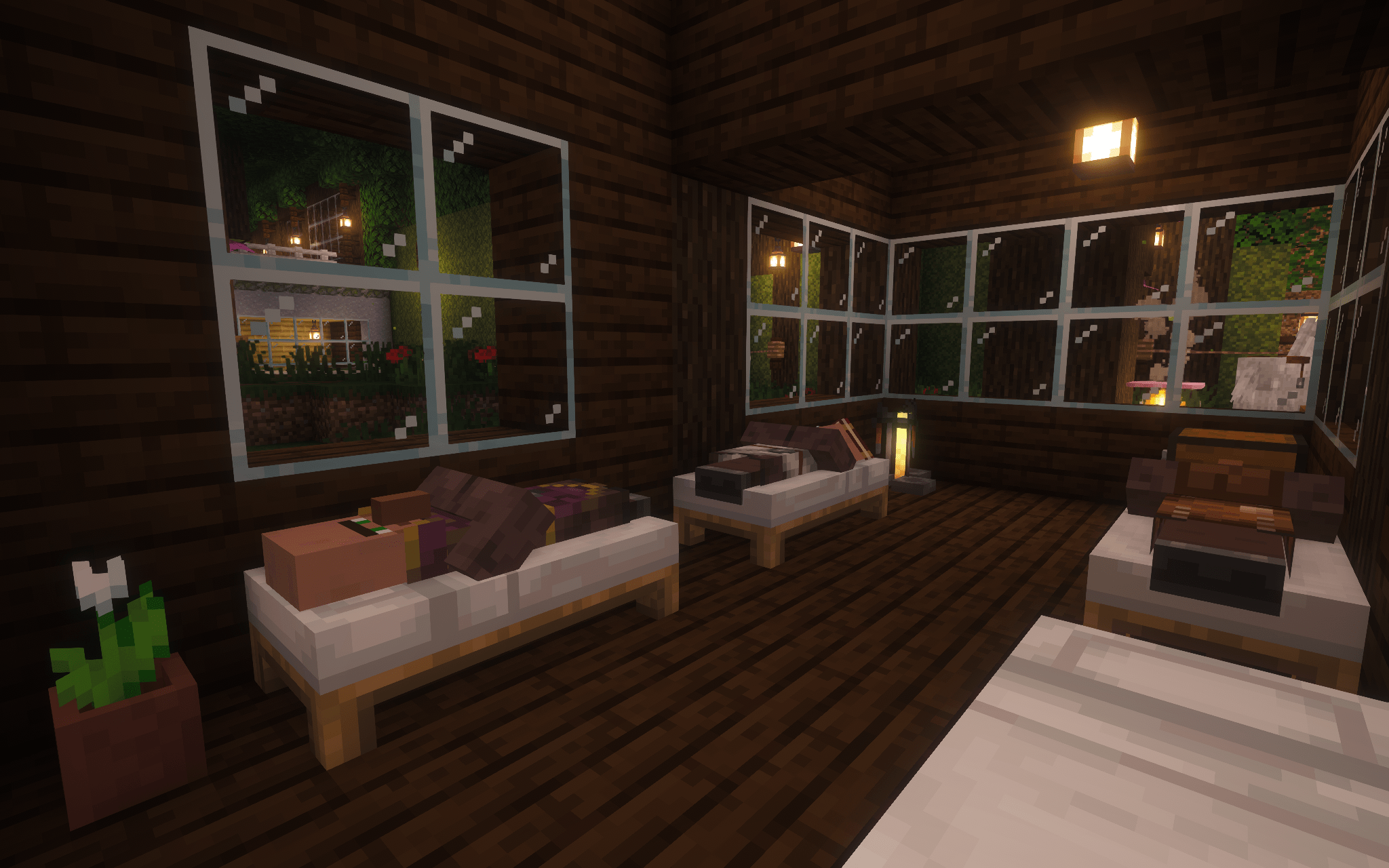
Sleeping villagers
One of the more unusual changes arrived during a thunderstorm.
I noticed a Skeleton Horse standing alone on the mushroom near my residence. Its stillness made it immediately recognizable as a trap rather than a stray spawn. Instead of triggering it immediately, I built a small bridge leading to the mushroom, creating a controlled approach path.
When I finally crossed, the trap activated as expected: lightning, four mounted skeleton riders, and a brief, concentrated fight.
Afterward, the horses remained.
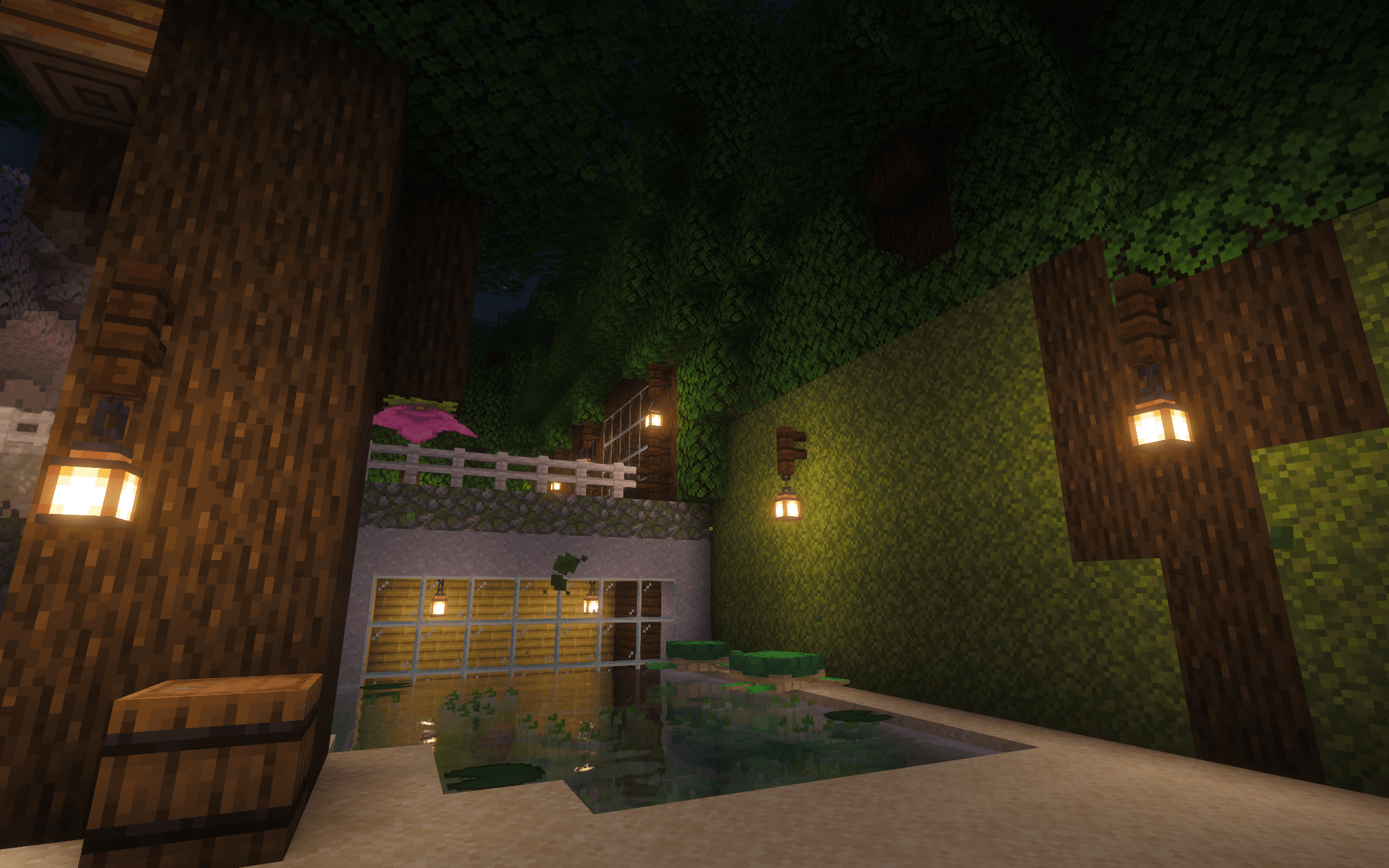
New Salmon/Turtle pond placement, with viewing room
I brought all four back to the village.
They do not serve a practical function beyond mobility, and I rarely ride them. Still, their presence changes the atmosphere. They stand near the fence, silent and unmoving, as if they belong to a different version of the world that occasionally overlaps with this one.
But not all changes arrived quietly.
One morning, I stepped outside and found a large Illager raiding party already inside the compound. There had been no horn, no distant movement on the horizon, no clear indication of how they had crossed the perimeter. The outer fence remained intact. The gates were closed. Yet they were there, moving through the space with the kind of confidence that suggested they had never been outside it.
The fight itself was brief and uneven.
They were not especially difficult to defeat once I understood where they had positioned themselves, but the encounter did not end without consequence. Before I could intervene, they killed my only Llama.
In fairness, the Llama had initiated the conflict.
It had wandered close, reacted first, and escalated the situation in the way Llamas tend to, abruptly and without any awareness of the odds. By the time I reached the courtyard, the outcome was already determined.
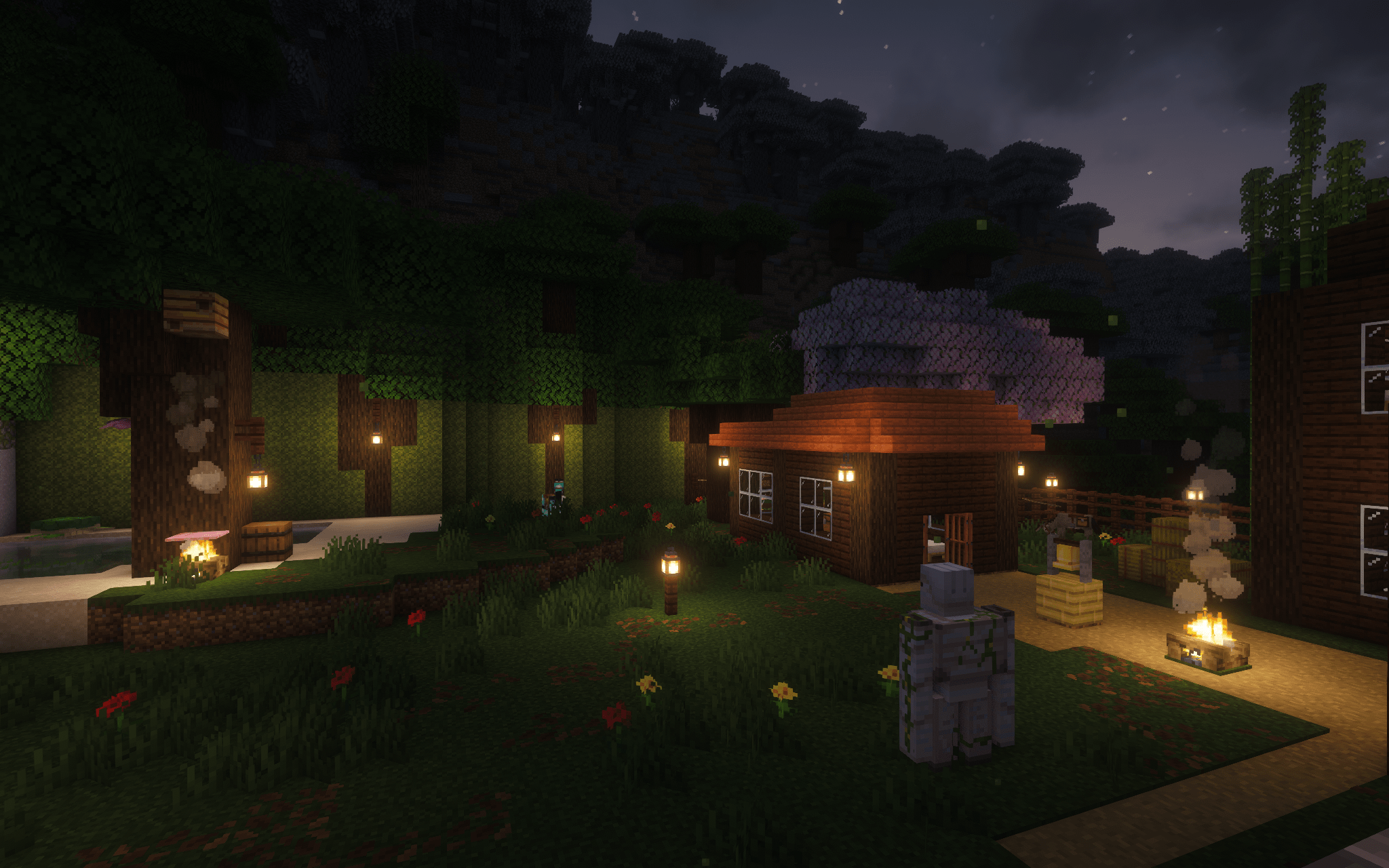
Village at night time, Iron Golems patrol
Its absence is noticeable in a way I did not expect.
Unlike other animals, which exist in groups or as part of systems, the Llama had always been singular. It occupied a narrow space near the edge of the compound, moving unpredictably but remaining within a familiar range. There was no practical function attached to it. It was simply present.
Now that space remains empty.
The raid itself left no lasting damage, no structures destroyed, no systems disrupted, but it introduced a different kind of awareness. The perimeter feels less absolute than it did before. Even when nothing else has changed, there is now the understanding that intrusion is possible without warning.
It does not make the area feel unsafe. It makes it feel permeable, and that subtle shift has lingered longer than the encounter itself.
Not long after the village stabilized, it gained a form of protection I had not actively planned.
The villagers eventually spawned their own Iron Golem. It appeared quietly one morning, already moving along the paths as if it had always been part of the layout. Its presence immediately changed the atmosphere. Hostile mobs that once lingered at the fence line now disappeared quickly, dealt with before they could accumulate.
For a while, that seemed sufficient.
Then I noticed another Iron Golem standing outside the outer perimeter fence.
It was positioned near the edge of the boundary, wandering slowly, separated from the village by only a few blocks but unable to cross on its own. Its body was heavily cracked, the damage visible across its surface in irregular patterns. It had clearly been fighting for some time, most likely against the steady flow of nearby zombies, and had done so without support.
I brought it inside.
The process was simple, if slightly awkward: a Lead attached, a slow walk along the fence line, and a careful route through the gate to avoid unnecessary obstacles. Once inside, it paused briefly, then began to patrol as if it had immediately accepted the space as its responsibility.
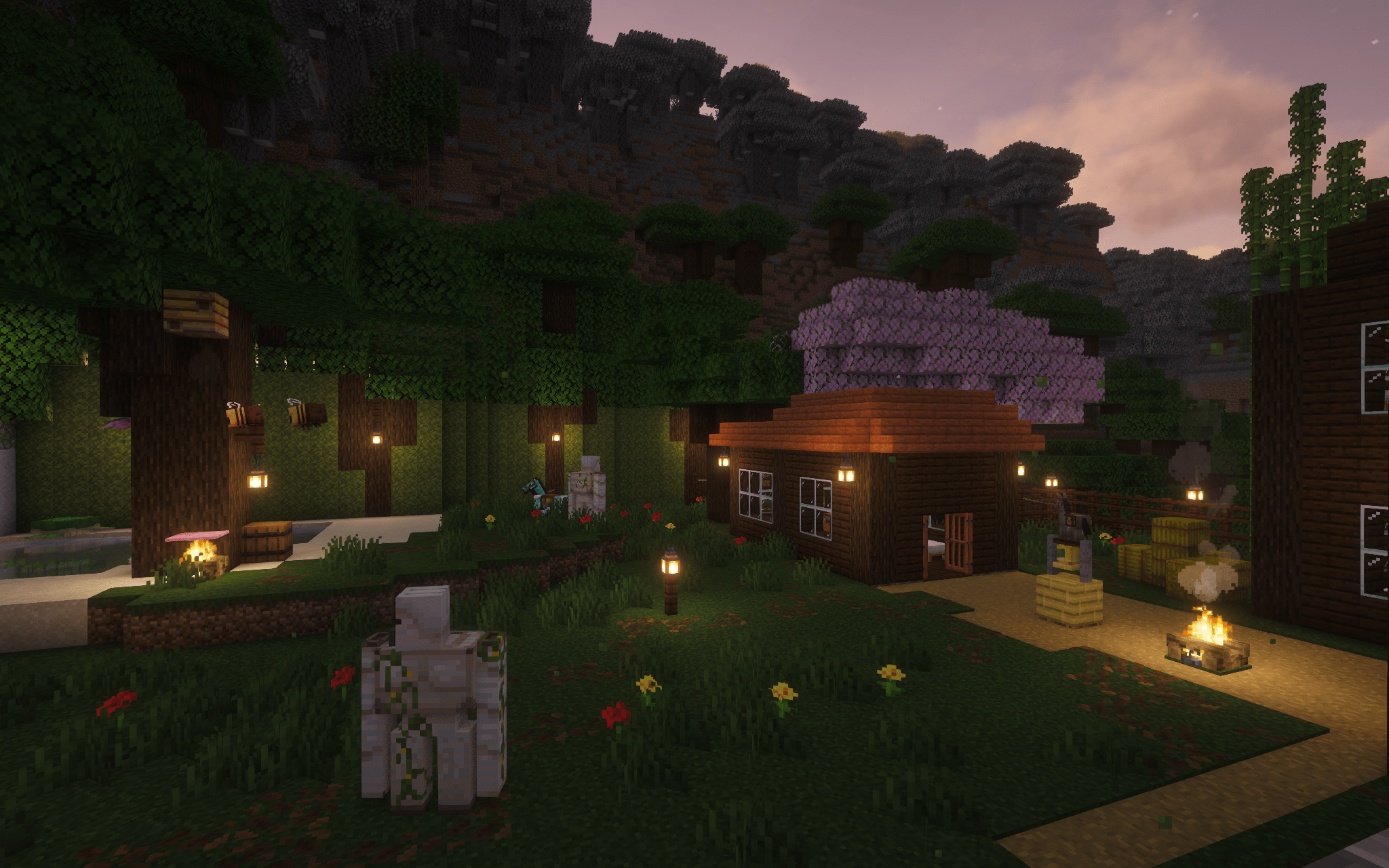
Village at morning, Bees doing their things
Only afterward did I learn something I had somehow overlooked until now: Iron Golems can be repaired with Iron Ingots.
The second golem required several.
Each ingot restored a portion of its structure, the cracks gradually disappearing until its surface returned to a uniform, intact state. The process felt unusually direct: damage addressed with the same material from which the entity itself is formed, without any intermediary step.
Now there are two of them moving through the village.
They do not coordinate, and they do not remain close to one another, yet their patrol paths overlap often enough that the settlement feels continuously watched. Their heavy footsteps have become part of the background rhythm, joining the sounds of villagers, animals, and distant environmental noise.
I did not build them.
I only made space for them.
And like many other systems here, they seem to function best when left mostly alone.
Closer to the residence, I finally addressed a space that had remained unresolved for a long time: the empty room adjacent to the so-called “stables”. It had existed mostly as a placeholder, neither useful nor intentionally unused, which made it feel unfinished in a way that gradually became noticeable.
It is still empty. But it is no longer neutral.
I rebuilt the room entirely out of Skulk, lining the floor and walls with growth gathered during long hours underground. Near the door, I placed a Skulk Sensor. At the center, a Skulk Shrieker.
The arrangement is simple and very effective.
Whenever I enter the storehouse next door, separated only by a single block wall, the Sensor detects the movement immediately. The signal travels without delay, and the Shrieker answers with its low, resonant cry that fills the surrounding rooms with a kind of artificial dread.
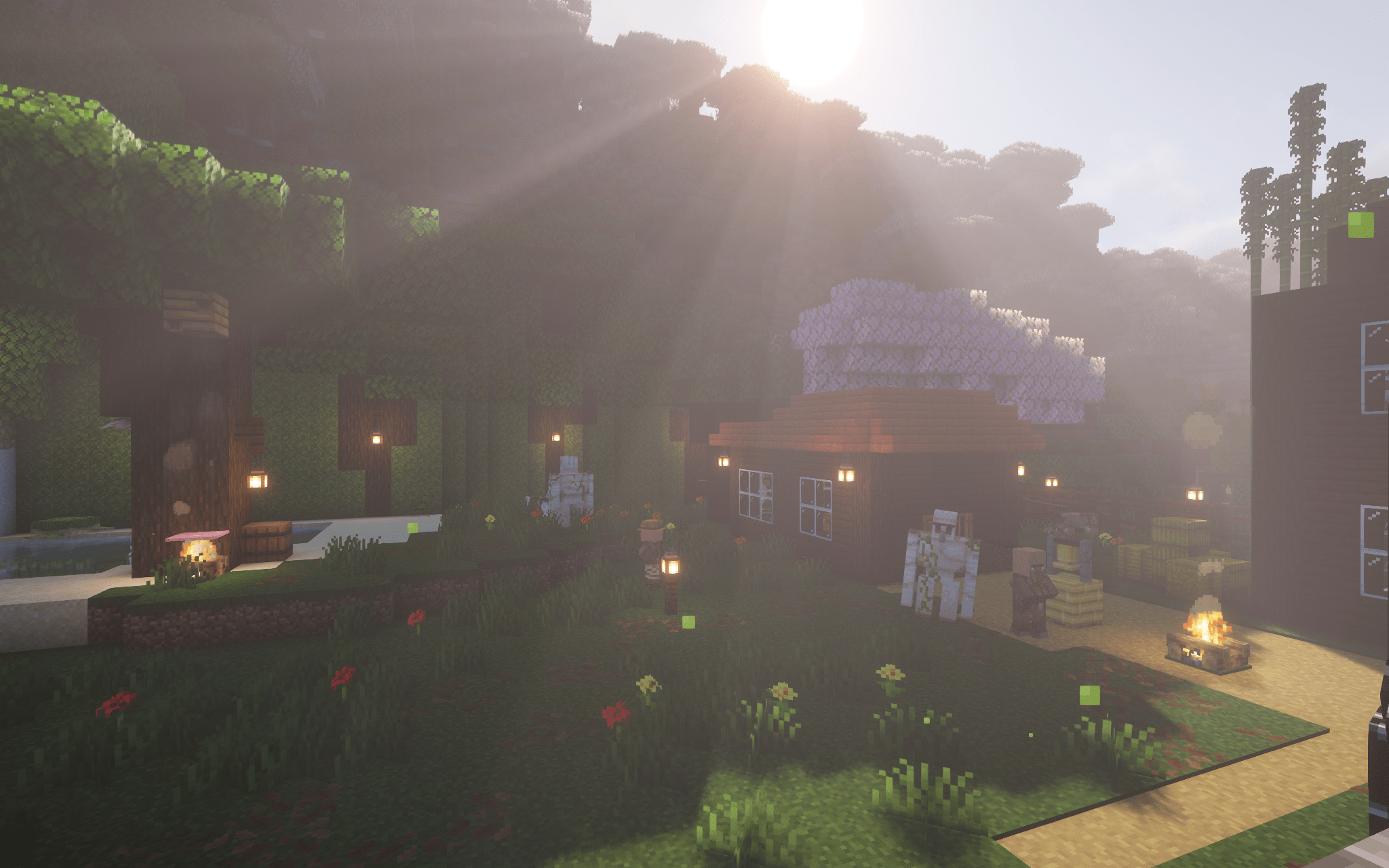
Village at daylight, sun shining, villagers idling around
I find the experience strangely satisfying.
Retrieving items from storage now carries a second layer of tension. There was already a form of effort involved in gathering the materials themselves: the mining, the sorting, the organization. Now there is also a small psychological obstacle attached to using them. The shriek does not cause harm, and in this location it cannot summon anything dangerous, but it creates a moment of hesitation every time.
It transforms a routine action into something that demands attention.
In another context, a Warden appearing inside my house would be catastrophic. Here, the impossibility of that outcome makes the threat purely symbolic, which may be why it works so well.
Meanwhile, the village has shifted from being a construction project to becoming an ongoing system.
I have been trading regularly with the villagers, not out of immediate need, but to build familiarity and improve reputation. Over time, their prices adjust, small discounts appear, and certain trades become easier to repeat. The process is incremental and somewhat mechanical, yet it produces a steady sense of mutual dependency.
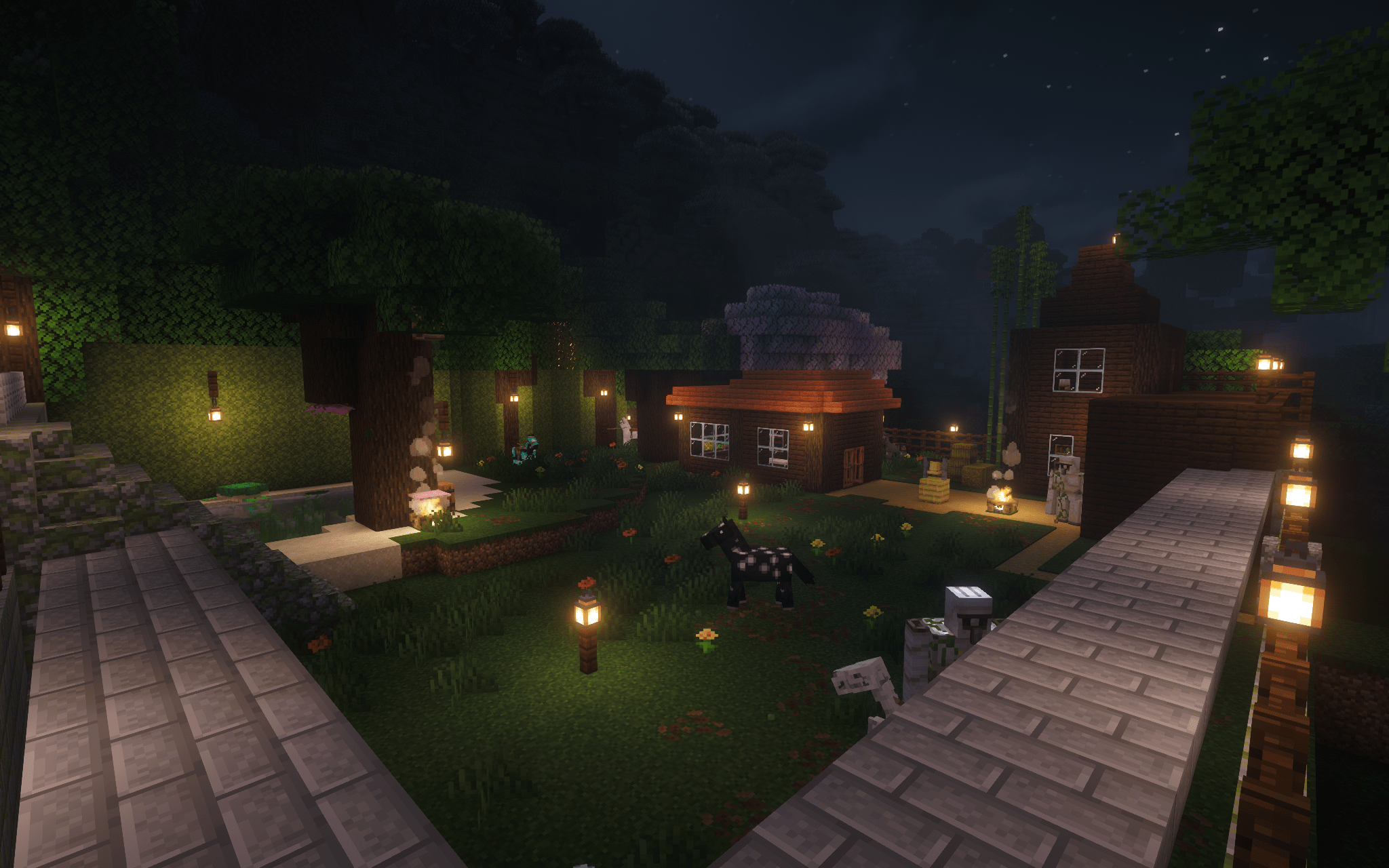
Outside wall platform, perimeter view
They rely on the infrastructure I built: beds, protection, and access to workstations. I rely on the consistency of their trades: predictable resources exchanged without the uncertainty of exploration.
None of these developments feel dramatic on their own. Moving a pond, establishing a settlement, repurposing an empty room, maintaining trade relationships; each is a small adjustment rather than a defining event.
Yet taken together, they continue to reshape how the area feels.
The land around my residence is no longer just a base of operations. It has become something closer to an environment that reacts to my presence: villagers working, animals contained but not static, distant fences marking quiet boundaries, and even the walls themselves occasionally answering movement with a low, echoing warning.
The world is not becoming louder, it is becoming more responsive; and that difference is enough to keep me adjusting it, one small decision at a time.
The world is not asking me to go farther right now.
It is asking me to notice what is already near, and to keep adjusting it, slowly, until it feels balanced again.
That work has no clear endpoint. And for now, that remains enough.