A Minecraft journal, I: settling in

I’m currently playing the latest version of Minecraft (1.21.11), and I’ve set it up through PolyMC. I like PolyMC because it allows me to manage multiple Minecraft instances independently, and, most importantly, I don’t need a Microsoft account to play. This makes launching different versions, testing mods, or experimenting with custom setups much smoother.
For mods, I’m using the Fabric loader, which is lightweight and highly compatible with a variety of performance and quality-of-life mods. Among my favorites are Iris and Sodium, which drastically improve performance and graphics. Sodium optimizes the game’s rendering, giving me high FPS even with a lot of graphical enhancements, while Iris acts as a bridge that enables the use of advanced shaders and visual effects.
Speaking of shaders, to really bring Minecraft’s world to life, I use the ComplimentaryUnbound shader pack. This shader is fantastic for achieving realistic lighting and shadows without being overly heavy on performance. It enhances sunlight, dynamic shadows, reflections, and ambient lighting in a way that makes biomes, forests, caves, and even buildings feel more alive and immersive. With these shaders, the world looks strikingly beautiful and cinematic, turning everyday Minecraft exploration into something that feels almost like a modern adventure game.
Overall, this setup strikes a great balance between visual fidelity and smooth performance, allowing me to enjoy the full aesthetic potential of Minecraft while keeping the gameplay responsive.
This article includes high-resolution images, which can significantly increase page load time and data usage.
I’ve been playing Minecraft for a while, but I started exploring this seed (-1106759604738884840) earlier this year, and honestly, it might be one of the best I’ve ever come across. The spawn point drops you right in the heart of a Dark Forest, perfect for those who love a touch of mystery. Just a short distance away, there are three massive Pale Forest chunks, ideal for adventurous explorations.
Within under 1,000 blocks, I’ve already spotted five Ancient Cities, if I can manage to sneak around without drawing the Warden’s attention, that is. There are also several Cherry Groves nearby, adding bursts of color to the landscape. The only biome that’s a bit further out is a Savanna, but that’s where I get my beloved acacia trees and orange wood, which I just can’t get enough of.
This seed feels like it was designed for adventurers and builders alike, with a mix of danger, beauty, and resources all within reach.
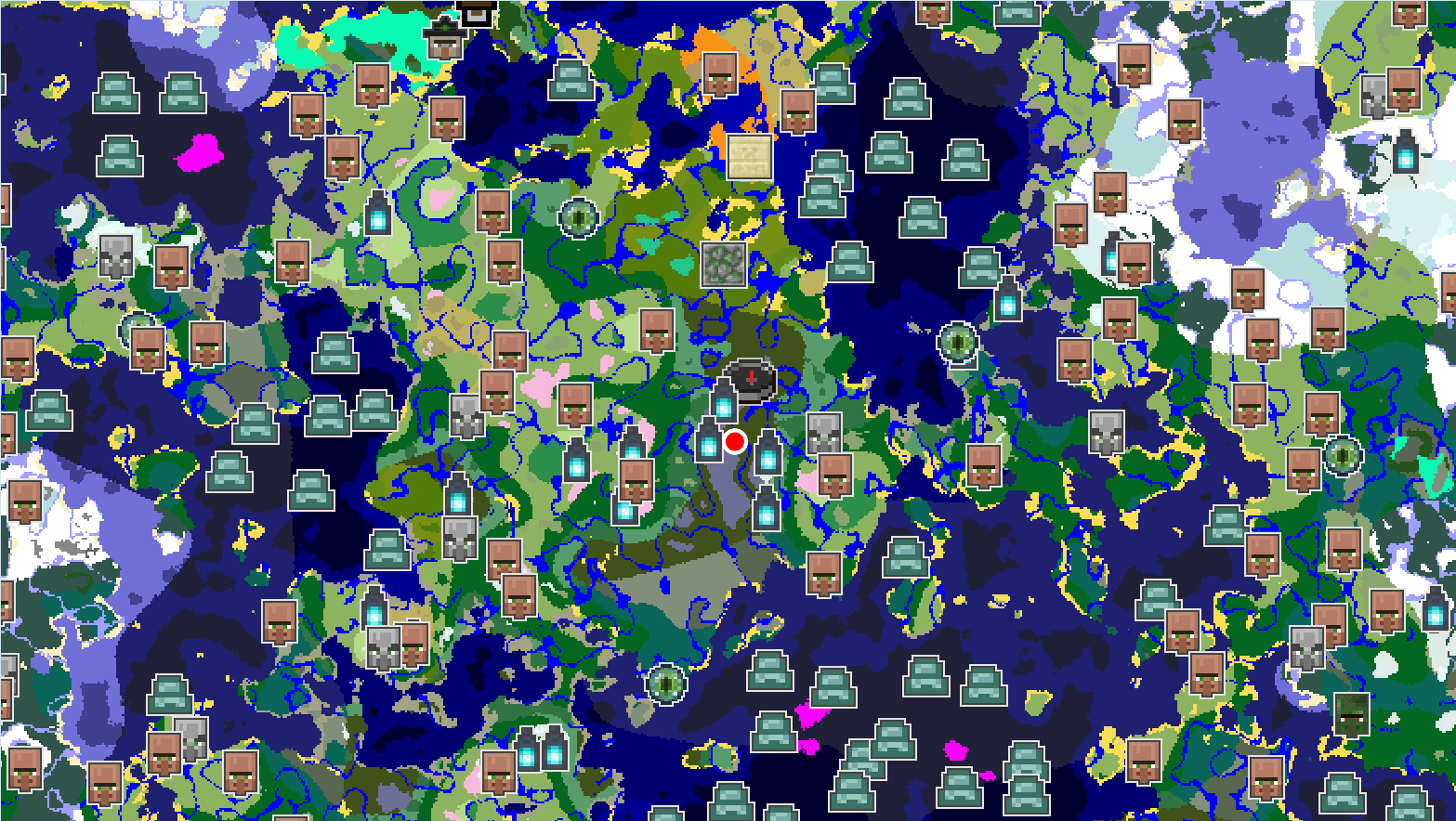
Seed map
I certainly didn’t dare make my home inside the Pale Forest: between the constant creakings, the eerie silence, and the near-heart attacks at every shadow, it felt like a death trap dressed up as a biome. Instead, I claimed a cozy little spot in the Dark Forest, just 50 blocks away from the Pale Forest. Close enough to ferry those white logs back home and turn them into planks, but far enough that I can sleep without my heart leaping into my throat every five seconds. It’s the perfect balance: just enough danger to keep things exciting, but not so much that I spend all my time running from Wardens, or worse, fainting at the sound of a tree creaking.
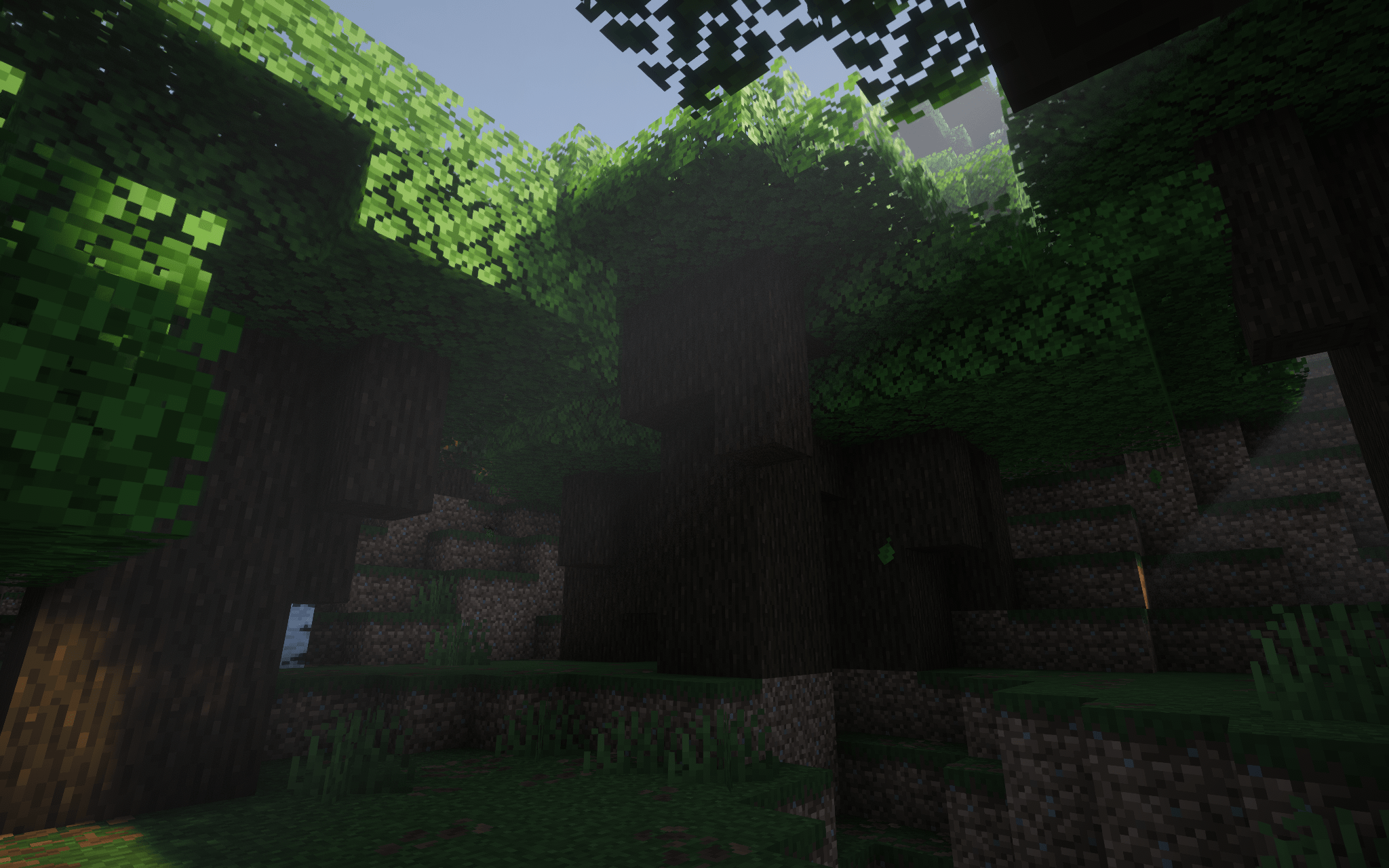
Selected spot for residence
I always approach video games military-style: first, scout the area, assess the risks, plan the strategy, and only then start building. That philosophy shaped the location of my residence. I needed easy access to at least three types of wood: in my case, Dark Wood, Pale Wood, and Birch, plus Water, with the nearest source just 50 blocks away. I also had to be close to essential building materials like Sand and Clay, and, naturally, I wanted a quick route to level up, which meant having easy access to a Deep Dark biome or an Ancient City. Nearby Ruined Portals are a bonus too, providing Obsidian for both a Nether Portal and the eventual Enchanting Table. Every strategic detail counts.
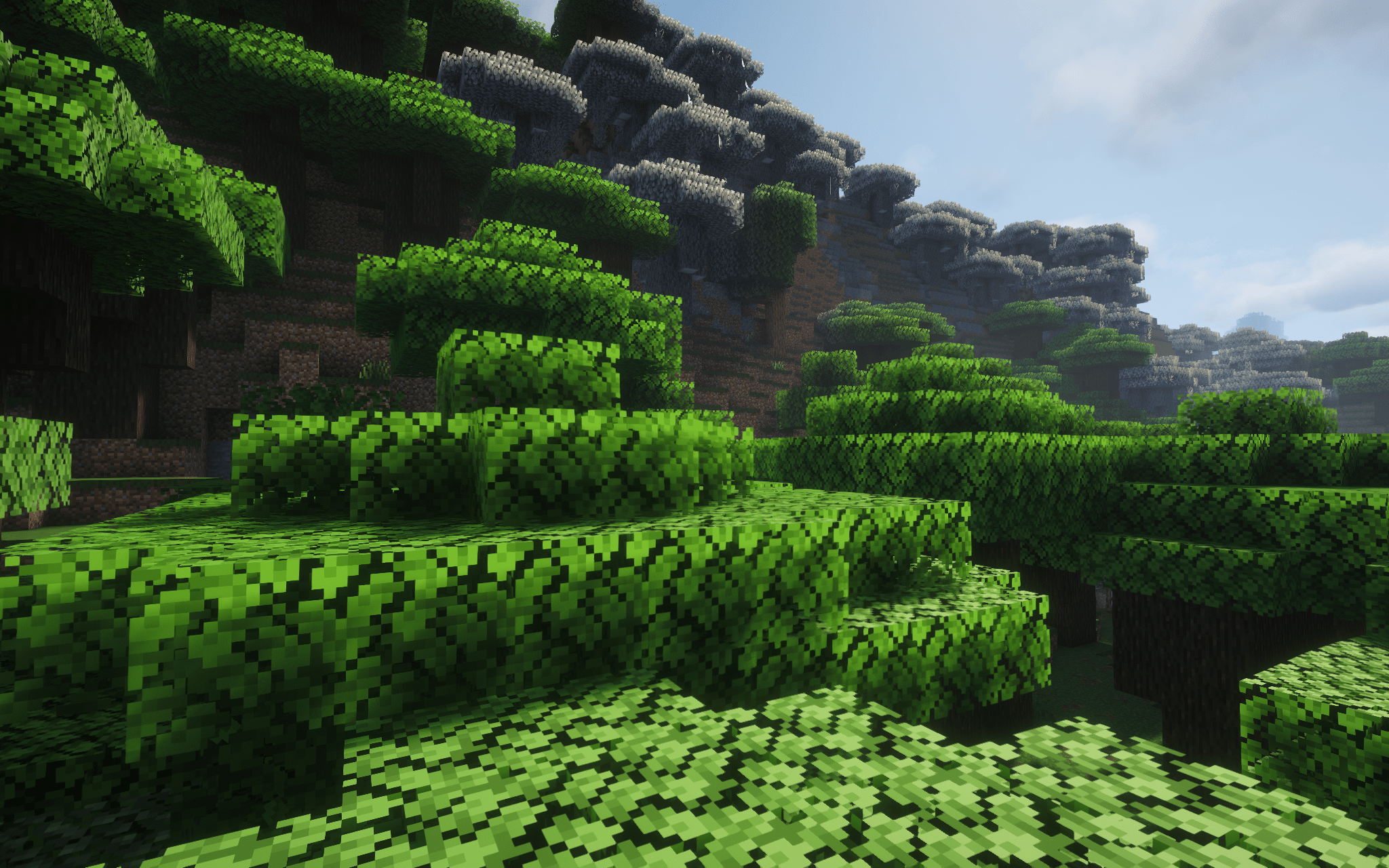
Selected spot for residence, view from up in the trees
Anyone who dares to settle in a Dark Forest quickly learns that it’s no quiet getaway. Shadows lurk beneath the towering trees, and every night brings a parade of Zombies and Skeletons ready to test your courage. Creepers slink silently through the undergrowth, waiting for the perfect moment to ruin your hard work with a single hiss and explosion. Fences aren’t optional here, they’re a lifeline, unless you enjoy the “hard way” of rebuilding from rubble.
Until your base is fully secured, it’s wise to sleep in the treetops, high above the forest floor where danger prowls. But don’t forget your bed, Phantoms circle relentlessly if you let a night go by without rest, swooping down to make sure sleep doesn’t come easy. Surviving a Dark Forest isn’t just about building; it’s about turning every night into a tense, thrilling adventure.
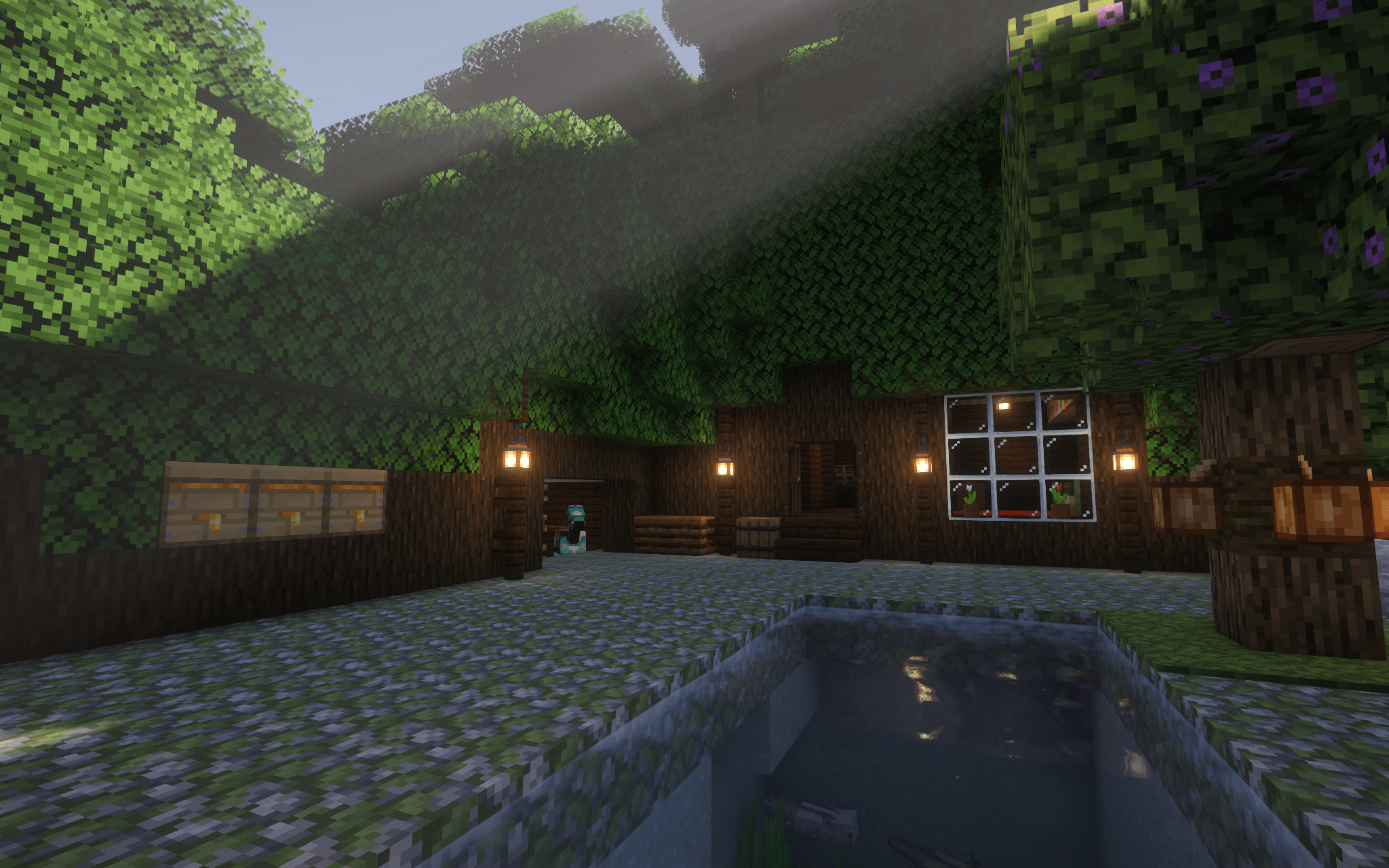
Minecraft residence, front view
In my base, self-sufficiency is key. I like to cultivate enough food to survive, and then some, while gathering the extra materials that make exploring and crafting more rewarding. I’m not one for sprawling farms or massive stables; in fact, I don’t keep any stables at all. Hunting for meat and leather in the wild feels far more thrilling than rounding up livestock. And as for sheep and chickens? Their constant bleating and clucking shatters the atmosphere, so you won’t find me building huge dairy farms; my adventure thrives on the sounds of the wild, not the farmyard.
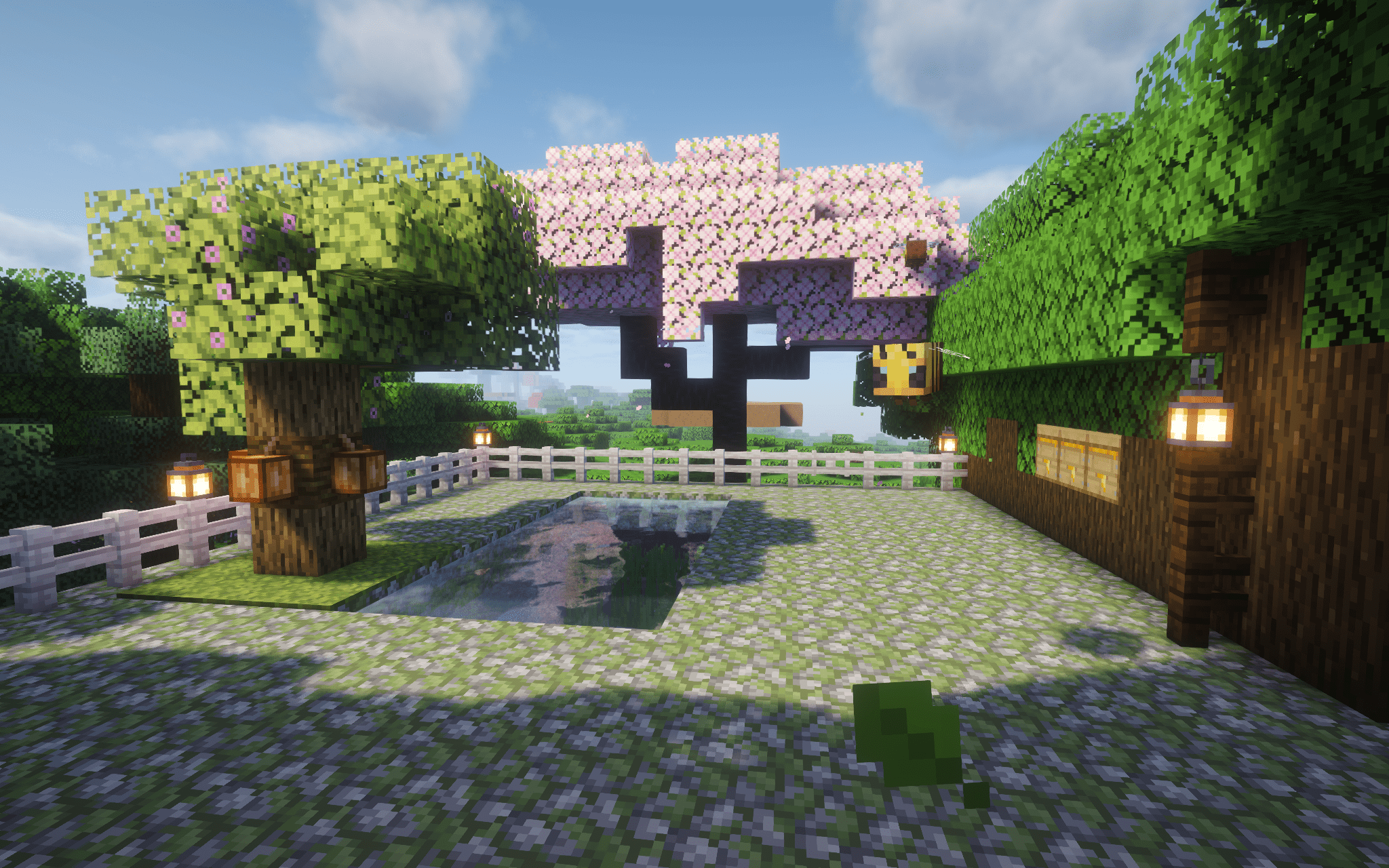
Minecraft residence, courtyard view
I’m never one to face Minecraft alone, so I always make sure my base is a little menagerie of companions. Two horses come first, perfect for riding, exploring, and, if needed, multiplying for future adventures. Then there’s a trusty donkey and a llama, both handy for hauling loot in their chests. Of course, I can’t forget the dogs for hunting, or cats to ward off Phantoms, they’re small but invaluable allies.
And every base needs a touch of charm, which is why I always build an Axolotl pool, those little guys are irresistible! I also make sure to gather a few bee hives, because Honey and Wax are useful. With a Silk Touch-enchanted tool, raiding a wild hive becomes a thrilling mini-quest. My home isn’t just a safe haven, it’s a lively hub full of friends, utility, and a little bit of magic.
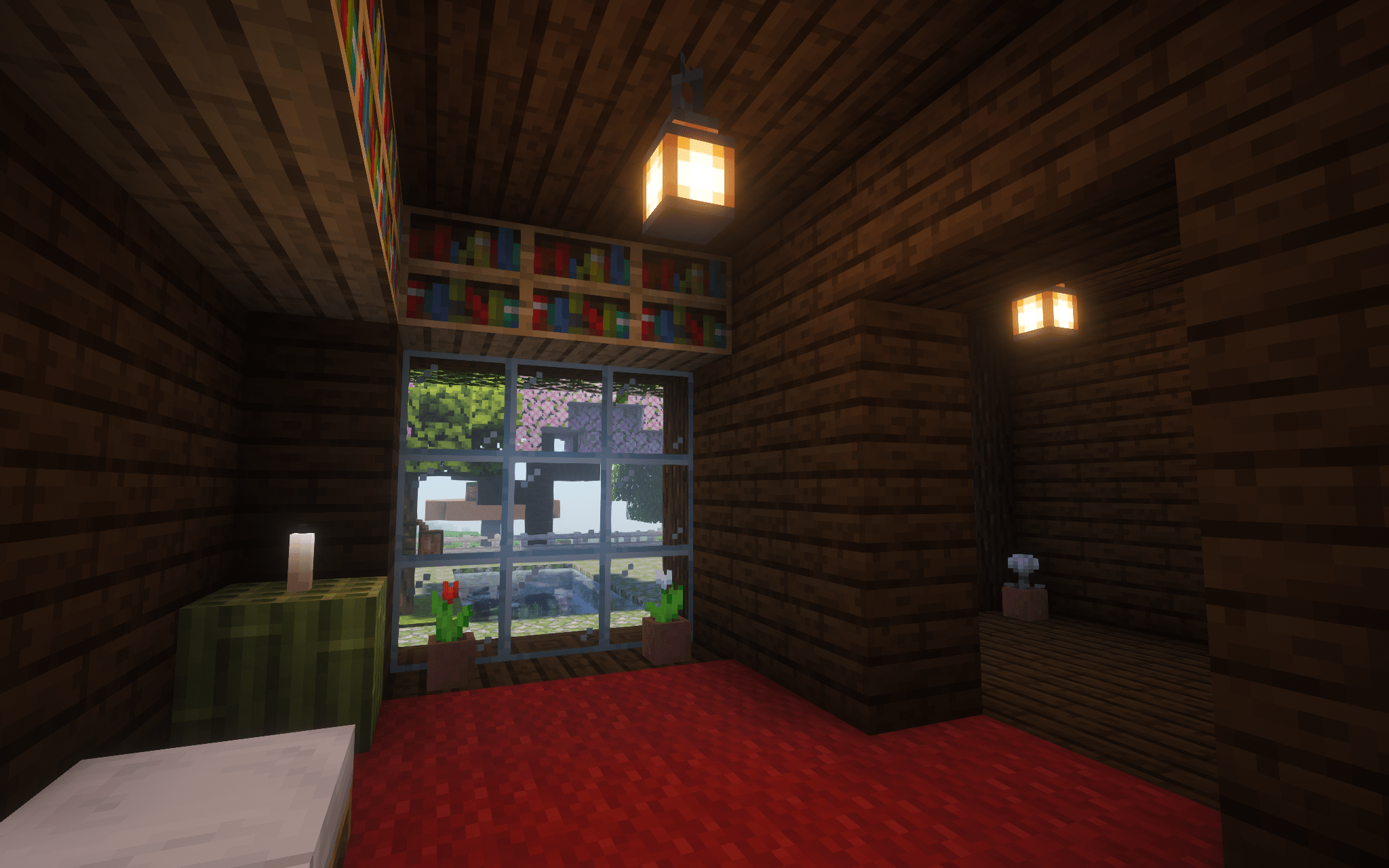
Minecraft residence, sleep quarter view
My home in Minecraft has become less of a single build and more of a small, lived-in world, shaped gradually as I spend time there. It’s divided into several areas, not because I planned it that way from the start, but because that’s how it naturally grew. Outside, there’s a fenced yard, mostly for safety, where I keep things I don’t want wandering off. It holds an Axolotl pool that I check on more often than I probably need to, and a fake Dark Wood tree that serves as a kind of façade, something decorative, slightly impractical, but familiar.
Beyond that is the main housing area, where everything essential comes together. There’s the sleeping space, simple and functional, and nearby the crafting zone, always surrounded by the tools and blocks I’ve been using most recently. Storage has slowly spread out as well, turning into a proper storehouse rather than a few scattered chests, and the enchanting library sits alongside it, feeling quieter and more intentional, like a place meant for pause rather than activity.
The last section is what I call the “fake stables”. They’re not really used for keeping thousands of sheep, but they house my horses, donkey, and llama, and I like knowing they’re there, contained and safe. Next to them is a separate storage room that doesn’t have a role yet. It’s empty, unfinished, and waiting for a reason to exist, for now, it’s enough that the space is there, holding the possibility of something future, while the rest of the home continues to quietly serve the present.
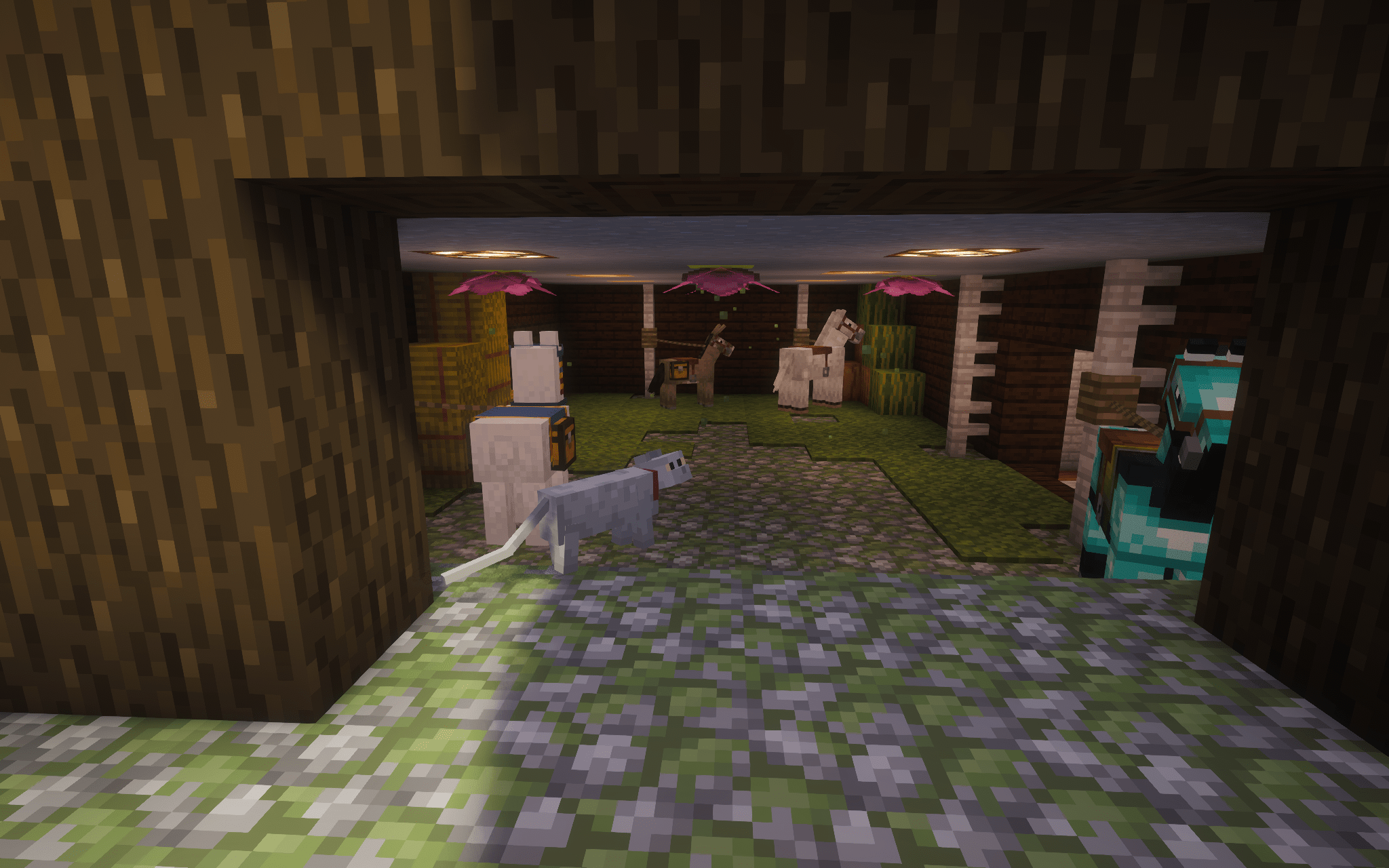
Minecraft residence, stables view
I like to keep a Nether Portal within easy reach, close enough to invite spontaneous trips into more hellish adventures, but far enough from my home to avoid unpleasant surprises. I learned early on that portals have a habit of letting trouble through when you least expect it, and I didn’t want to be caught off guard by a sudden crowd of Zombified Piglins wandering in uninvited. So I placed it nearby, but with just enough distance to feel safe.
What I didn’t expect was what waited on the other side. The first time I stepped through, disoriented by the familiar purple haze, I found myself staring straight at a Bastion Remnants ruin. For a moment it felt unreal, like the game had quietly decided to be generous. For something as chaotic as the Nether, it was a surprisingly lucky introduction, and it set the tone for every trip through that portal afterward.
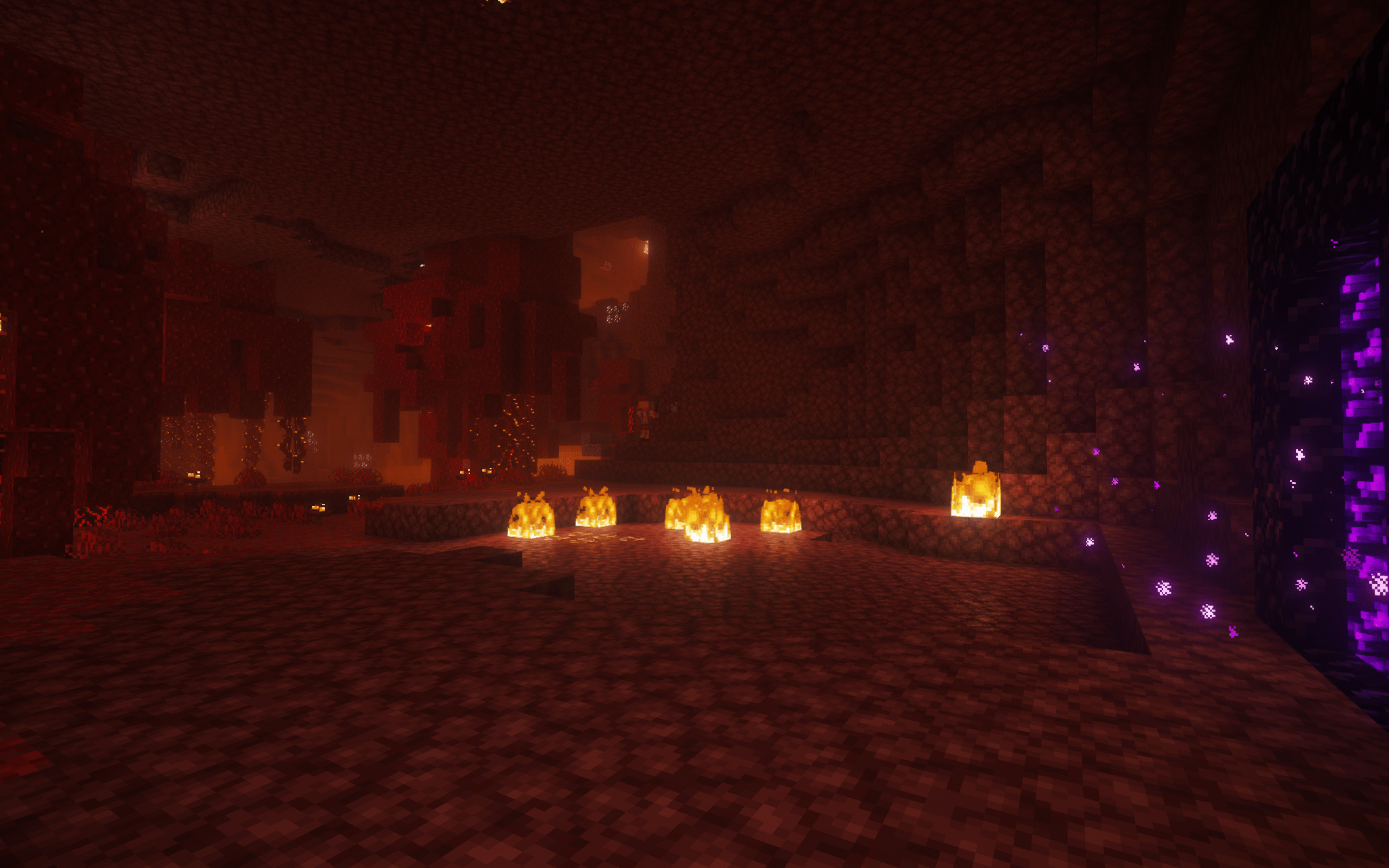
Nether portal close to home
As for plans going forward, I’m not particularly drawn to slaying the Ender Dragon. The Wither feels more like my kind of challenge, and that’s what I’ve started preparing for instead. Before that, I want to explore and conquer the nearby Ancient Cities, carefully skirting the attention of the ever-present Warden. On the Nether side of things, there’s also the long process of gathering Netherite Ingots, slowly working toward upgrading my Diamond tools and gear.
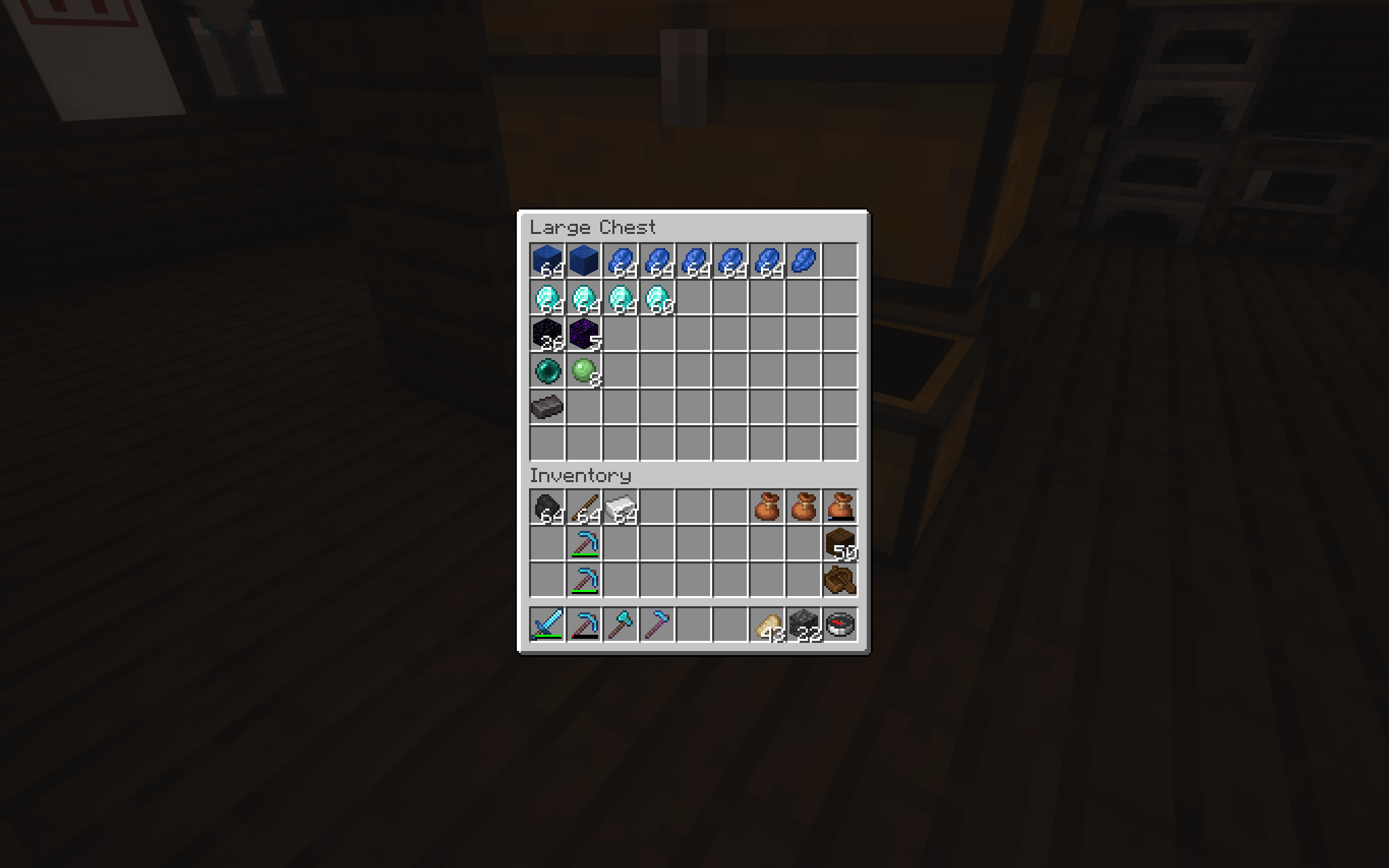
My precious materials
Looking ahead, I don’t feel any rush to finish the game in the traditional sense. Instead, I want to keep shaping the world around me in small, deliberate ways, projects that grow naturally as I spend time there. I’ve been thinking about expanding my home not outward, but inward: hidden rooms, quiet corridors, and spaces that exist more for atmosphere than function. Places that feel lived in, even if they’re rarely used. Maybe even a straight ladder into an Ancient City, wouldn’t that be something?
Exploration still calls to me, especially the kind that feels tense and careful rather than heroic. I want to keep pushing into Ancient Cities, learning how to move slowly, listening for danger, and leaving with more stories than loot. There’s something satisfying about surviving those places without ever fully disturbing them, as if I was only a guest passing through.
In the Nether, my goals are more practical but no less absorbing. I plan to spend time mining patiently for Ancient Debris, upgrading my gear piece by piece instead of rushing to perfection. Each Netherite upgrade feels earned, and I like the idea of my tools carrying a history, Diamond first, then something stronger, forged slowly.
I also want to build more things that don’t strictly need to exist. Small lodges, quiet lookout points, maybe a road that leads somewhere unnecessary. Structures that exist simply because I wanted to place the blocks, not because the game demanded it. Over time, I’d like my world to feel less like a checklist and more like a place I’ve been returning to for a long while.
For now, this is where things stand, but the world is still very much in motion. I’ll keep returning to it, changing things quietly, starting new projects, abandoning others, and letting the place grow at its own pace. There’s always another corner to explore or another idea waiting to take shape, so if you’re curious, stay tuned, there will be more updates from this world as it continues to unfold.